How Do tire inflator Work? Complete Working & User Guide
Portable tire inflators are compact electric air compression tools that convert electrical energy into high-pressure air to reinflate vehicle tires accurately and automatically. This guide details their working principles, core structural components, standardized inflation procedures, practical parameter interpretation, key safety precautions, and daily maintenance methods. Proper operation of the tire inflator effectively solves flat or underinflated tire issues, reduces driving risks, and ensures stable vehicle tire performance for daily and emergency road use.
Flat or underinflated tires are one of the most common roadside hazards, causing poor handling, reduced fuel economy, and even tire blowouts. A portable tire inflator is a compact, plug-and-play emergency tool that quickly reinflates vehicle tires to the correct pressure without visiting a gas station or repair shop. Designed for cars, SUVs, motorcycles, and bicycles, modern tire inflators feature automatic pressure detection and shutoff functions for safe, user-friendly operation. This guide explains their working principles, core components, standard operating procedures, parameter definitions, safety rules, and daily maintenance tips.
1. What Is a Portable Tire Inflator?
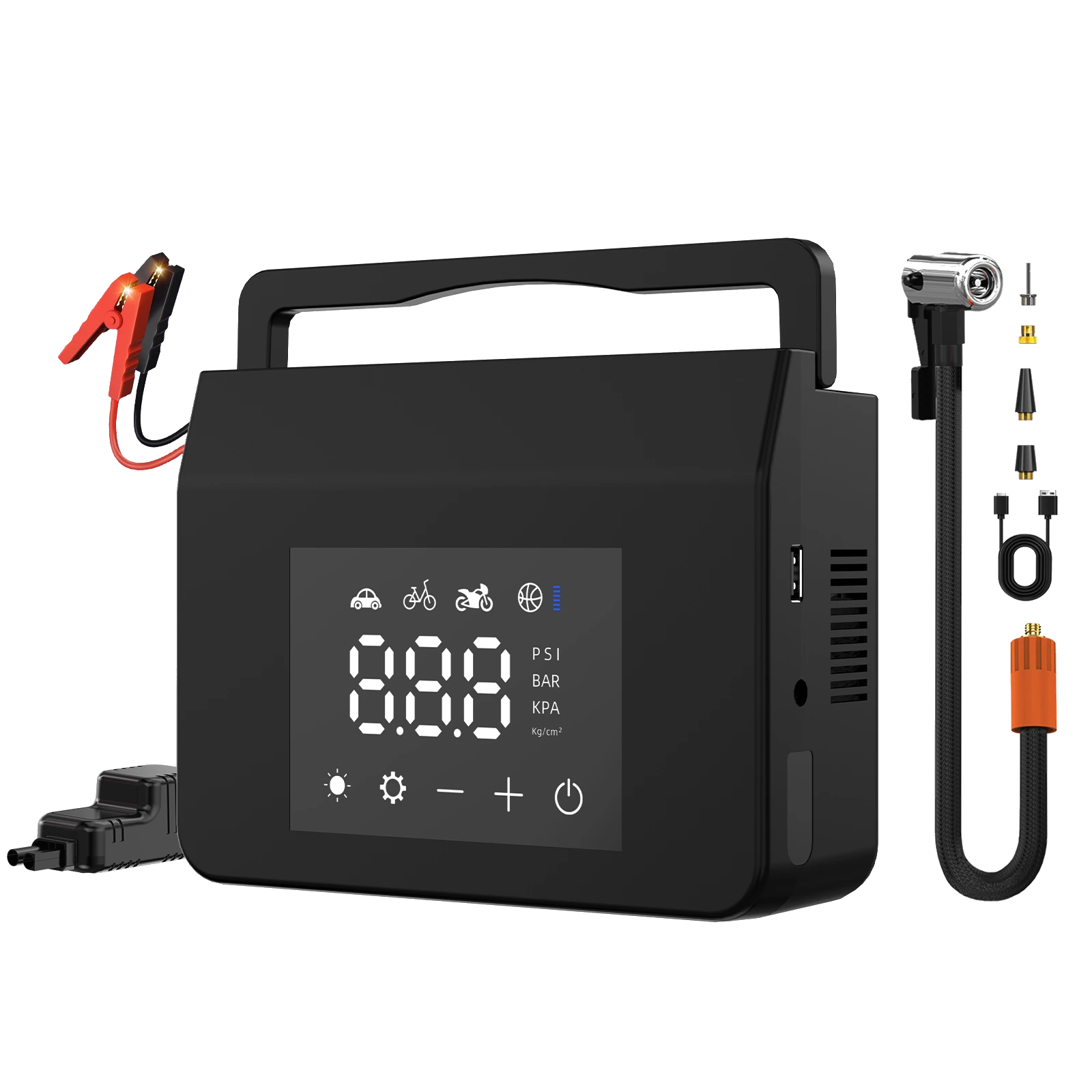
A tire inflator (also known as a portable air compressor) is a mini electric air compression device that converts electrical energy into pneumatic energy. Unlike bulky professional air compressors, portable inflators are lightweight and vehicle-powered, usually working through a 12V car cigarette lighter or built-in rechargeable battery. Most models come with a digital display, preset pressure values, and multiple air nozzles, supporting inflation for tires, sports balls, air mattresses, and other inflatable products.
2. How a Tire Inflator Works (Core Principle)
The working mechanism of a tire inflator relies on mechanical air compression and pressure monitoring. It squeezes ambient air into the closed tire cavity and stabilizes tire pressure through real-time detection. The whole process includes three key stages:
Step 1: Electric Motor Activation
After powering on, the built-in DC motor starts running at high speed and drives the internal transmission structure. The motor provides continuous mechanical power for air compression, converting electric energy into kinetic energy stably.
Step 2: Air Compression & Delivery
The reciprocating piston or turbine structure continuously sucks in ambient air and compresses it to form high-pressure air. The compressed air passes through the internal air pipe and is steadily delivered to the tire through the connected air hose and nozzle.
Step 3: Pressure Detection & Automatic Stop
The built-in pressure sensor monitors the tire’s real-time pressure throughout inflation. When the detected value reaches the user-preset standard pressure, the intelligent control system automatically cuts off power and stops inflation, avoiding over-inflation and tire damage.
3. Key Components & Functions
Each precision component ensures efficient, stable, and safe inflation performance:
- DC Motor: The power core of the inflator. It provides high-speed rotation power to support continuous air compression and stable inflation speed.
- Compression Piston & Cylinder: The air compression unit. It completes air suction and compression, converting normal-pressure air into high-pressure air for tire inflation.
- Smart Pressure Sensor & Control Chip: The intelligent control center. It realizes real-time pressure monitoring, preset value matching, and automatic power-off protection.
- Digital Display & Button Panel: Shows real-time tire pressure, preset pressure unit (PSI/Bar/KPA), and working status, supporting accurate pressure adjustment.
- Air Hose & Multi-Function Nozzles: Air transmission accessories. The sealed air hose ensures no air leakage, while interchangeable nozzles adapt to tires, balls, and inflatable bedding.
- Heat Dissipation System: Prevents overheating during long-time operation and protects the motor and internal circuit from high-temperature damage.
4. Step-by-Step Inflation Guide (Standard Procedure)
Follow these standardized steps for accurate and safe tire inflation for 12V civilian vehicles:
- Check Standard Tire Pressure: Confirm the manufacturer-recommended tire pressure (usually labeled on the car door jamb or user manual). Common passenger car pressure ranges from 32–36 PSI. Select the correct pressure unit on the inflator.
- Connect Power Supply: Plug the inflator’s power cord into the vehicle’s 12V cigarette lighter socket. For rechargeable wireless models, confirm sufficient battery power before use.
- Install Air Nozzle Firmly: Screw or clamp the air nozzle tightly onto the tire inflation valve. Ensure a sealed connection to avoid air leakage that causes inaccurate pressure reading and slow inflation.
- Preset Target Pressure: Use the control buttons to set the standard tire pressure value. The digital screen will display the real-time tire pressure of the current tire for reference.
- Start Inflation & Auto Stop: Turn on the inflation switch. The device starts working and inflates continuously. It will automatically stop working once the preset pressure is reached.
- Disassemble & Finish: After inflation stops, remove the air nozzle gently, tighten the tire valve cap, and power off the inflator. Store the device and accessories in a dry place.
5. Core Parameter Guide
Master key parameters to select and operate the inflator correctly:
- Pressure Units (PSI/Bar/KPA): Three mainstream display units. PSI is the most commonly used in North America; 1 Bar ≈ 14.5 PSI, 100 KPA = 1 Bar.
- Maximum Inflation Pressure: Most portable inflators support up to 100–150 PSI, fully meeting the pressure demands of cars, SUVs, and motorcycles.
- Inflation Speed: Measured by air flow rate, determining filling efficiency. Higher flow rate means faster inflation for flat tires.
- Duty Cycle: Defines continuous working time. Standard models support 10–15 minutes of continuous operation before needing a cooling interval.
6. Safety Rules & Common User Mistakes
Essential Safety Rules
- Do not operate the inflator for longer than its rated duty cycle; pause for cooling to avoid motor burnout.
- Keep the air hose unobstructed and avoid bending or squeezing during operation to prevent air blockage and device damage.
- Never leave the device unattended during long-time inflation, even with the auto-stop function enabled.
- Avoid using the inflator in high-temperature environments or near flammable liquids and gases.
Common Operation Mistakes to Avoid
- Loose nozzle connection leading to air leakage, resulting in insufficient tire pressure after inflation.
- Setting excessive pressure higher than the vehicle standard, causing tire over-inflation, bumpy driving, and tire burst risks.
- Continuous frequent use without cooling, leading to rapid device overheating and shortened service life.
- Ignoring unit switching errors, causing pressure value misjudgment and improper inflation.
7. Maintenance & Storage Best Practices
Reasonable maintenance ensures stable performance and prolongs the inflator’s service life:
- Regular Cooling: Stop and cool down the device timely after continuous work to protect the motor and compression components.
- Keep Accessories Clean: Clean dust and dirt on the air nozzle and hose regularly to avoid blockage affecting inflation accuracy.
- Standard Storage: Store in a cool, dry, dust-free environment; avoid long-term extrusion and high-temperature exposure.
- Regular Power Inspection: For rechargeable models, charge the device every 2–3 months during idle periods to prevent battery failure.
8. FAQ
Q1: Why does tire pressure drop slightly after inflation?
Slight pressure drop is normal after removing the nozzle due to tiny air loss during disassembly. Fine-tune the pressure slightly higher than the standard value appropriately for compensation.
Q2: Why is inflation slow or ineffective?
The main reasons are loose nozzle sealing, blocked air hose, overheated motor, or insufficient power. Reconnect the nozzle, cool the device, and check power supply to fix the problem.
Q3: Is hot casing during operation normal?
Moderate heat generation is normal due to motor operation and air compression. Stop use immediately if the device is extremely hot or has abnormal noise and odor.
Summary
Portable tire inflators work by converting electric energy into compressed air, accurately filling tires to standard pressure with intelligent real-time monitoring and automatic stop functions. Compact, efficient, and easy to operate, they effectively solve underinflated and flat tire problems for daily driving and roadside emergencies. Following standardized operation, safety specifications, and routine maintenance ensures accurate inflation, protects tires, and improves driving safety.